


.jpg "Huong River")
La rivière des Parfums possède deux sources situées toutes deux dans la chaîne des montagnes des Truong Son. Le Ta Trach qui descend depuis le nord-ouest des montagnes, traversant 55 chutes avant d'atteindre le confluent à Bang Lang. L'affluent le plus court, le Huu Trach, traverse lui 14 chutes impressionnantes avant d'atteindre le confluent ou se forme la rivière des Parfums proprement dite.
La rivière coule alors vers les temples de Hon Chen et Ngoc Tran et tourne vers le nord-ouest, serpentant sur les plaines de Nguyet Bieu et Luong Quan. Elle part ensuite vers le nord-est en direction de Hué. La rivière aux eaux vertes passe ensuite Hen Islet et plusieurs villages, traversant l'ancienne capitale des Chau Hoa, avant de se déverser dans le lagon de Tam Giang.
De Bang Lang à l'estuaire de Thuan An, son cours s'étend sur 30 kilomètres et s'écoule paresseusement en raison de la faible déclivité de la région.
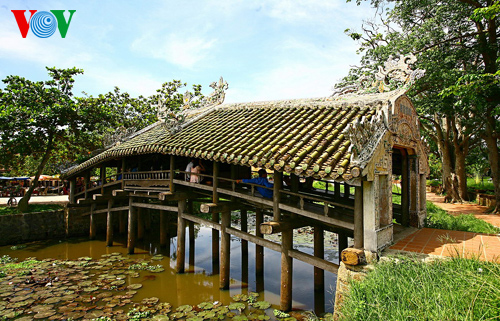
Thanh Toan old bridge built in 1776 for the connection between villages and a place to have some breeze during the summer day. The Bridge is one of the oldest bridge in Vietnam recognized by as country heritage in 1990
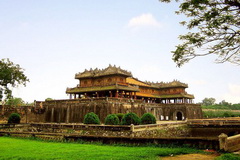
Elle sert d’entrée principale et de façade de la Cité Impériale. Construite en 1833 sous le règne de Minh Mang au moment du ré-aménagement de la Cité. La Porte du Midi constitue un ensemble d’architectures diversifié, elle...
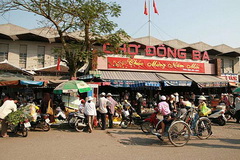
Dong Ba Market is the biggest market in Thua Thien-Hue Province.Under the reign of King Gia Long (1802-1819), there was a big market named Qui Gia near Chanh Dong (Dong Ba) Gate of Hue Citadel. The name “Qui Gia” referred to the return to Phu Xuan Capital (Hue nowadays) of Nguyen...
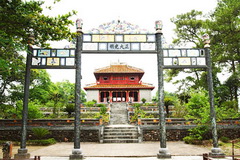
After being on the throne for seven years, Emperor Thieu Tri was sick and died on 4 November 1847 at the age of 41. In his lifetime, the Emperor neither thought of his death nor wanted the people and soldiers to waste so much labour and property for him, so he did not have his tomb built.As soon...
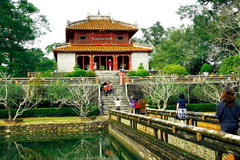
Le tombeau de Minh Mang est situé à l’extérieur de la ville, sur le mont Cam Ke, à 12 km de Hué, sur la rive ouest de la Rivière des Parfums.En avril 1840, le roi Minh Mang changea le nom du mont "Cam Ke" en mont "Hieu Son" et donna au futur tombeau...
.jpg)
Pagoda was built in the shape of the Chinese character "Khau" (mouth), with the main building consisting of three rooms and two wings. It faces the southeast and uses Ngu Binh Mount as a front screen.The pagoda was originally a small hut built by Nhat Dinh in 1843, who was formerly recognized by...
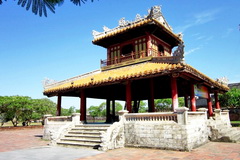
It is a delicate pavilion with a south view. In front of the Pavilion is a large court leading to the Nghinh Luong Pavilion (Pavilion for Fresh Air) on the Perfume River bank.There had once been a tiger - elephant duel on the pavilion grounds in 1829 to entertain Emperor Minh Mang. In his...
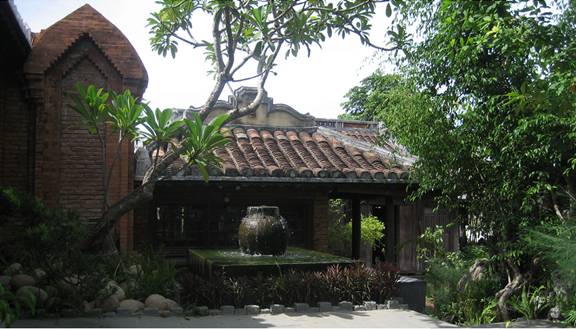
Travelling to Hue you may look for some corners where still keep remain it owns culture, architecture and a traditional food let visit Phuoc Tich ancient village with old house architectures, 500 years old temple and a collection of ceramic relics which are strong reflection of Hue culture....
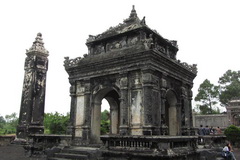
Dong Khanh's Tomb construction lasted through the lives of four Emperors Nguyen (1888-1923). That's why it bears the stamp of two architectural inclinations of two different historical periods. After being crowned, Dong Khanh had a temple built beside his father's tomb named Truy Tu...
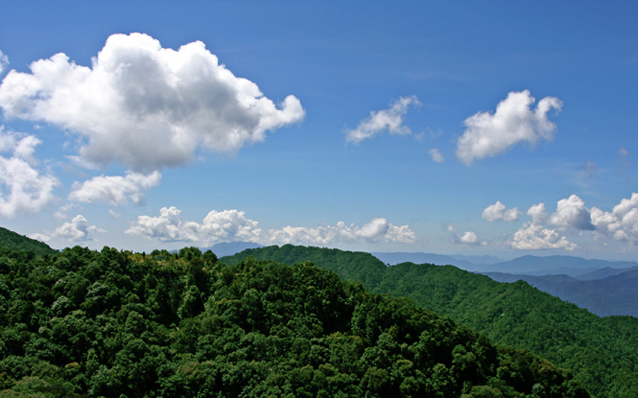
The national park, extended in 2008, lies on a high mountain ridge that runs west-east from the Laotian border to the East Sea at the Hai Van pass. This ridge interrupts the coastal plain of Vietnam, and, therefore, forms a biogeographical boundary between the faunas and floras of northern and...

Soyez le premier à connaître nos offres de voyage exclusives et les nouveaux circuits !.






.png "Vietjet Air")
 Langue

