


Village de soie Van Phuc
Situé à une quinzaine de kilomètres du centre de Hanoï, le village de Van Phuc est semblable à un ruban de soie qui longe la rivière Nhue. La soie naturelle de Van Phuc, appelée soie de Ha Dong et renommée pour sa finesse, est un produit haut de gamme très prisé.
La sériciculture et le tissage de la soie de ce village ont près de 1.000 ans. Selon la tradition orale, les premières implantations humaines au bord de la rivière Nhue remontent à 1.200 ans. Sous la domination chinoise, La Thi Nga, une fille originaire de Van Phuc, enseigna aux gens du village la sériciculture et le tissage de la soie. Au fil du temps, ce métier n'a cessé de se développer, devenant le principal gagne-pain de ses habitants.
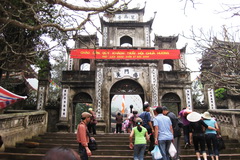
Approximately 70 kilometers southwest of Ha Noi, Huong Son boasts quite a few pagodas built in the Posterior Le Dynasty. Until the beginning of the 20th century, there have over 100 pagodas. Visitors can go to Huong Son via the Ha Dong - Van Dinh route.Vietnamese or foreigners alike wish to come...
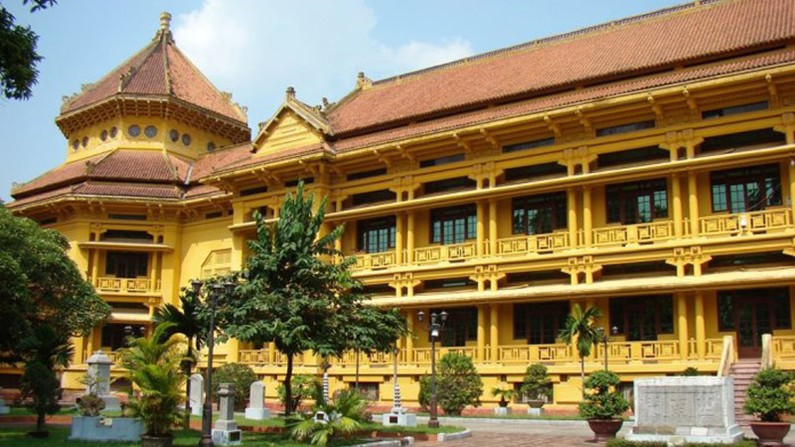
Viet Nam National Museum of History was founded on 26 September 2011 on the basis of merging Viet Nam History Museum and Revolution Museum.With 200,000 documents and artifacts displayed on an area of 4,000m², the museum includes two main exhibitions: the exhibition about Vietnamese history...
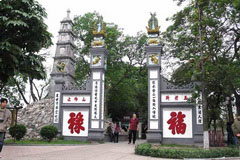
Le temple Ngọc Sơn, signifiant temple de la montagne de jade, est un sanctuaire situé sur le Lac Hoan Kiem dans le centre d'Hanoi au Viet NamUn des piliers du temple porte l'inscription célèbre: « Le confucianisme gît partout, à l'est,...
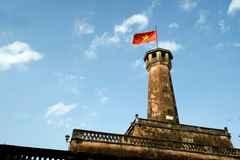
Hanoi Flag Tower at the age of nearly 200 years is renowned as one of the symbols of Hanoi. The construction began in 1805 and completed in 1812, the 11th year of Gia Long time, Nguyen dynasty, five years after construction time of Flag Tower in Hue.From 1894 to 1897, the French colonial...
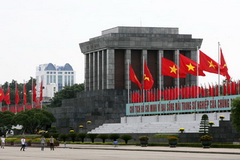
The square adjacent to the Ho Chi Minh complex is called Ba Dinh square, where many important national historical events in modern history took place. The square was originally developed by French colony and known as Round Point Pugininer. On September 2nd, 1945 – now Vietnam...
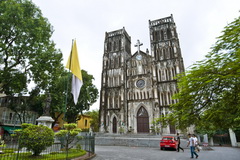
La cathédrale Saint-Joseph (Nha Tho Lon) à Hanoï, capitale du Viêt Nam, fut construite en 1886 par les Français sous l'épiscopat de Mgr Paul-François Puginier (1835-1892). Elle est de style néogothique. C'est...
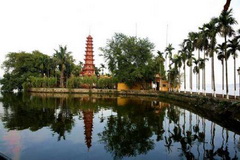
Tran Quoc Pagoda is located on an islet of West Lake in Ha Noi. Tran Quoc Pagoda is one of the oldest pagodas in Viet Nam and a cultural symbol of Vietnamese Buddhism.It is said that, the pagoda was built under the reign of King Ly Nam De (544-548) under its original name of Khai Quoc (National...
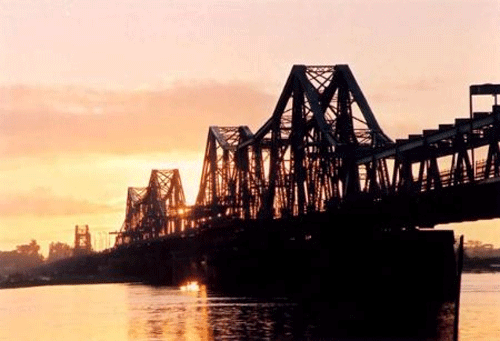
Le pont permet au Chemin de fer Nord-Sud du Viêt Nam venant de Hô-Chi-Minh-Ville de franchir le fleuve Rouge après la gare de Hanoï et de continuer sur la rive gauche du fleuve vers Lào Cai pour ensuite se diriger vers le Yunnan en Chine. Il est de type à...
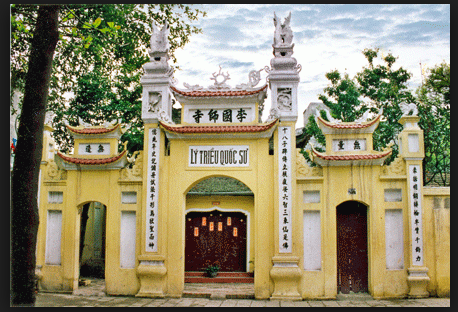
Tran Quoc Pagoda was first erected with the name “Khai Quoc” (Opening a country) during King Ly Nam De Dynasty, between year 544 and 548 on the bark of Red River (approximately within Yen Phu Ward, Tay Ho District now). Till the 15th century, during King Le Thai Tong reign, it...
.jpg)
Tay Tuu Flower VillageAddress: Tay Tuu Village, Tu Liem district, HanoiProducts: roses, daisies, liliesFollow the footsteps of Lady Dong Thi in the poem “An afternoon on West Lake” to Tay Tuu Village, long famous for its splendid flowers and uniquely Hanoi cultural beauty. In early...

Soyez le premier à connaître nos offres de voyage exclusives et les nouveaux circuits !.






.png "Vietjet Air")
 Langue